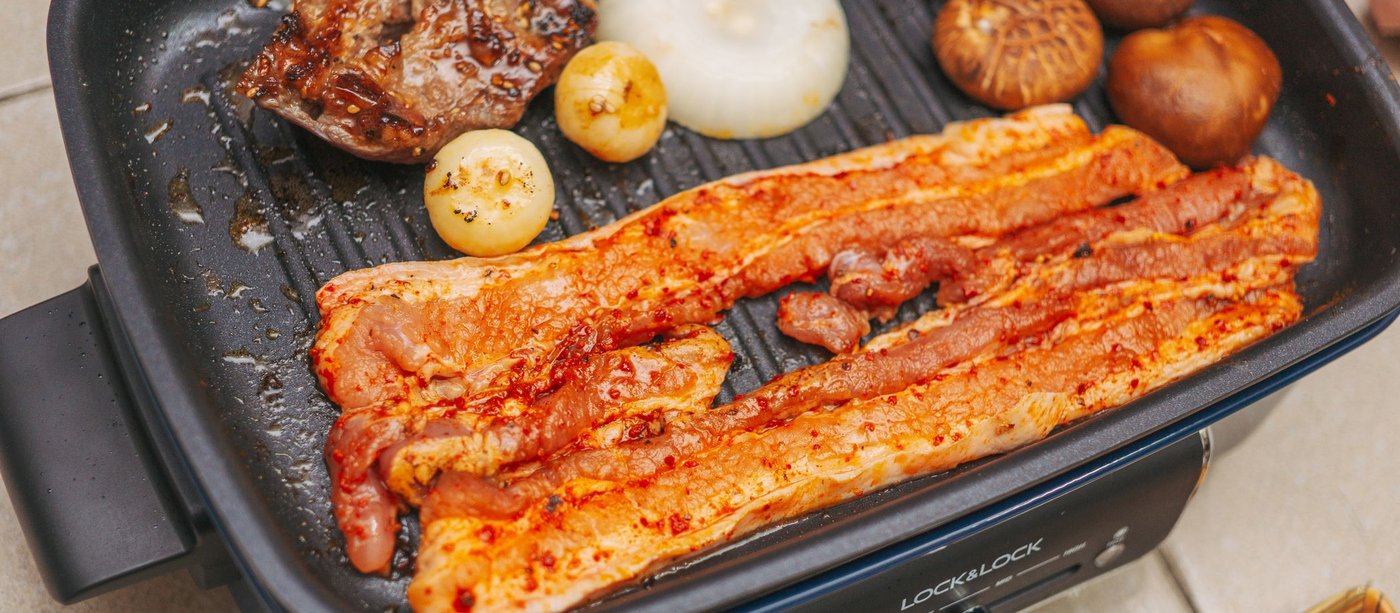
Korean BBQ restaurants charge you for theater — the tabletop grill, the scissors, the banchan refills. Samgyeopsal at home is the same show minus the bill, and it is the easiest entry into Korean grilling for one unfashionable reason: the meat is not marinated at all. Per Maangchi's samgyeopsal-gui recipe — posted back in 2009, updated in 2023, holding 4.8 out of 5 across 357 votes with a video past 2.1 million views — the formula is 3 pounds of plain pork belly for 4 people, sliced into bite-size pieces, grilled until both sides crisp. No sauce touches the pork before the fire. Everything that makes the meal happens around the meat.
The shopping list for four. Every amount below comes from the same Maangchi recipe, pulled into one list so the grocery run is a single trip.
| Item | Amount for four | Where it goes |
|---|---|---|
| Pork belly, unmarinated | 3 pounds | The grill, in bite-size pieces |
| Green onions | 15 to 17 | 14 to 16 for pajeori, 1 for ssamjang |
| Soy sauce | ¼ cup | Pajeori dressing |
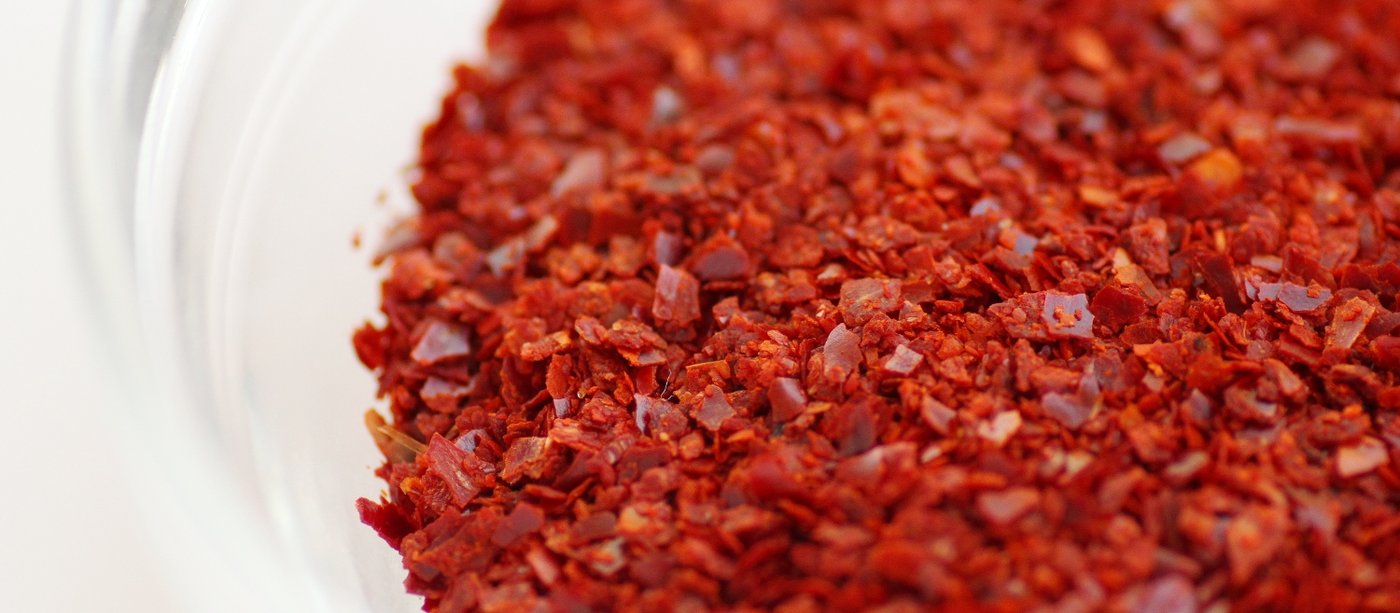
| Gochugaru (flakes, not paste) | 2 tablespoons | Pajeori dressing |
| Doenjang | ¼ cup | Ssamjang |
| Gochujang | 2 tablespoons | Ssamjang |
| Toasted sesame oil | 2 tablespoons, plus a wipe for the grill | 1 tablespoon each in pajeori and ssamjang |
| Toasted sesame seeds | 1 tablespoon plus 2 teaspoons | Pajeori, then ssamjang |
| Sugar | 4 teaspoons | 2 teaspoons each in pajeori and ssamjang |
| Garlic | 1 clove, plus whole cloves to grill | Ssamjang, then the grill plate |
| Lettuce and perilla leaves | One leaf per bite | The wraps |
| King oyster mushrooms | Thick slices, optional | The grill, for anyone who skips meat |
Pajeori: the green onion salad that is secretly the recipe
The supporting act that outworks the star is pajeori — a mountain of thinly sliced green onions, 14 to 16 of them (about 5 cups), soaked in cold water for 5 minutes to pull the harsh edge, then dressed in a quarter cup of soy sauce, 2 teaspoons of sugar, a tablespoon each of toasted sesame seeds and sesame oil, and 2 tablespoons of gochugaru (if the bag is empty, Aleppo pepper at 1 to 1 is the gochugaru substitute for a raw salad like this). That five-minute soak is the difference between a salad and a punishment; skip it and raw allium runs the table. Portion it into small bowls, spoon sauce over each, and watch it vanish faster than the pork.
Ssamjang, the Maangchi way
Store-bought ssamjang exists, but her version is worth the three minutes: a quarter cup of doenjang against 2 tablespoons of gochujang — a 2-to-1 lean toward the funky soybean side — plus a chopped green onion, a minced garlic clove, 2 teaspoons each of sugar and sesame seeds, and a tablespoon of sesame oil. The doenjang-forward ratio is the point: it reads savory first, spicy second, which is what you want smeared on rich pork. She keeps a standalone ssamjang recipe if you want to make a jar for the week.
The one-shot rule and the rest of the table
Assembly is a contact sport: lettuce leaf in hand, perilla leaf if you found them, hot pork, dab of ssamjang, pinch of pajeori, cooked garlic or onion off the grill. Then Maangchi's non-negotiable eating instruction — fold it and eat it in one bite. Her words: "Don't bite it in half, it will break open! One-shot!" She is right, and everyone learns it the messy way exactly once. Two practical notes from the same recipe: wipe a little toasted sesame oil on the grill plate before the first batch for flavor, and if someone at the table doesn't eat meat, thick-sliced king oyster mushrooms grill up meaty enough that nobody feels like an afterthought. Round it out the way a Korean table would — a small stew, a couple of banchan, and something cold to drink, poured by the rules in our soju etiquette guide.
Thick, thin or honeycomb: picking the belly
The name tells you what to look for. Samgyeopsal means "three-layer flesh," for the stripes of lean and fat that show when pork belly is cut, and the classic tabletop grill takes it in thick, fatty slices. The cut has since been spun into named styles you will meet on menus. Daepae samgyeopsal, invented in 1996, is sliced so thin it is named after the carpenter's plane, a daepae. Beoljip samgyeopsal, from the 2000s, is cut in a pattern that looks like a beehive, beoljip in Korean. Marinated belly, in flavors from ginseng and wine to doenjang and gochujang, has caught on since the late 2000s, but plain is still the default: in a 2006 survey by the National Agricultural Cooperative Federation, 85% of South Korean adults named pork belly their favorite pork cut. The recipe here is the plain version, and it needs nothing else.
What else goes on the grill, and how the night ends
The pork never cooks alone. Slices of garlic, onion, green chili, mushrooms and kimchi go on beside it and fry in the fat running off the belly, and ssammu, thin sheets of pickled radish, join lettuce and perilla as wrappers, per the same Wikipedia entry. The finish is fried rice: leftover meat mixed with rice, gim-garu (seaweed flakes) and seasoning into bokkeum-bap. Two more things travel with the dish. March 3 is Samgyeopsal Day, a pun on the three layers; ZenKimchi traces it to a 2003 promotion by the Paju Yeoncheon Livestock Corporation, and restaurants now greet it with discount ads. The other is a myth: that a pork belly dinner protects you from fine-dust air pollution. Wikipedia traces the idea to miners eating pork after a shift and notes that it runs the wrong way, since the fat can help the body absorb the oil-soluble chemicals in those particles.
Daniel's Bite
Unpopular but correct: for a first-timer, samgyeopsal beats bulgogi as your entry into Korean BBQ at home, precisely because there is no marinade to get wrong — your only job is not walking away from the grill. The detail most coverage misses is the cold-water soak on the green onions; a limp, bitter pajeori almost always skipped it. And buy the belly whole and slice it yourself — pre-cut "BBQ" packs at Korean groceries charge a convenience premium for a knife stroke you can do at home, same scam as the pre-cut jjigae pork. Try this: run the night once for four people and weigh what is left. The pork survives; the pajeori bowl does not. If your green onion salad outlasts the meat, you didn't soak it, and I will stand by that diagnosis.
What to try next
- Scale up to the full spread with our Korean BBQ at home guide — burner placement, banchan count, the works.
- Learn the pouring and clinking rules before you put soju on the table: soju etiquette is half the fun of the meal.
- Check what a pork belly night actually costs you with the Korean food calorie calculator — then decide you don't care, which is also traditional.
Sources
- Grilled pork belly BBQ (Samgyeopsal-gui) — Maangchi
- Ssamjang (Korean spicy dipping sauce) — Maangchi
- Samgyeopsal — the dish and how it is eaten — Wikipedia