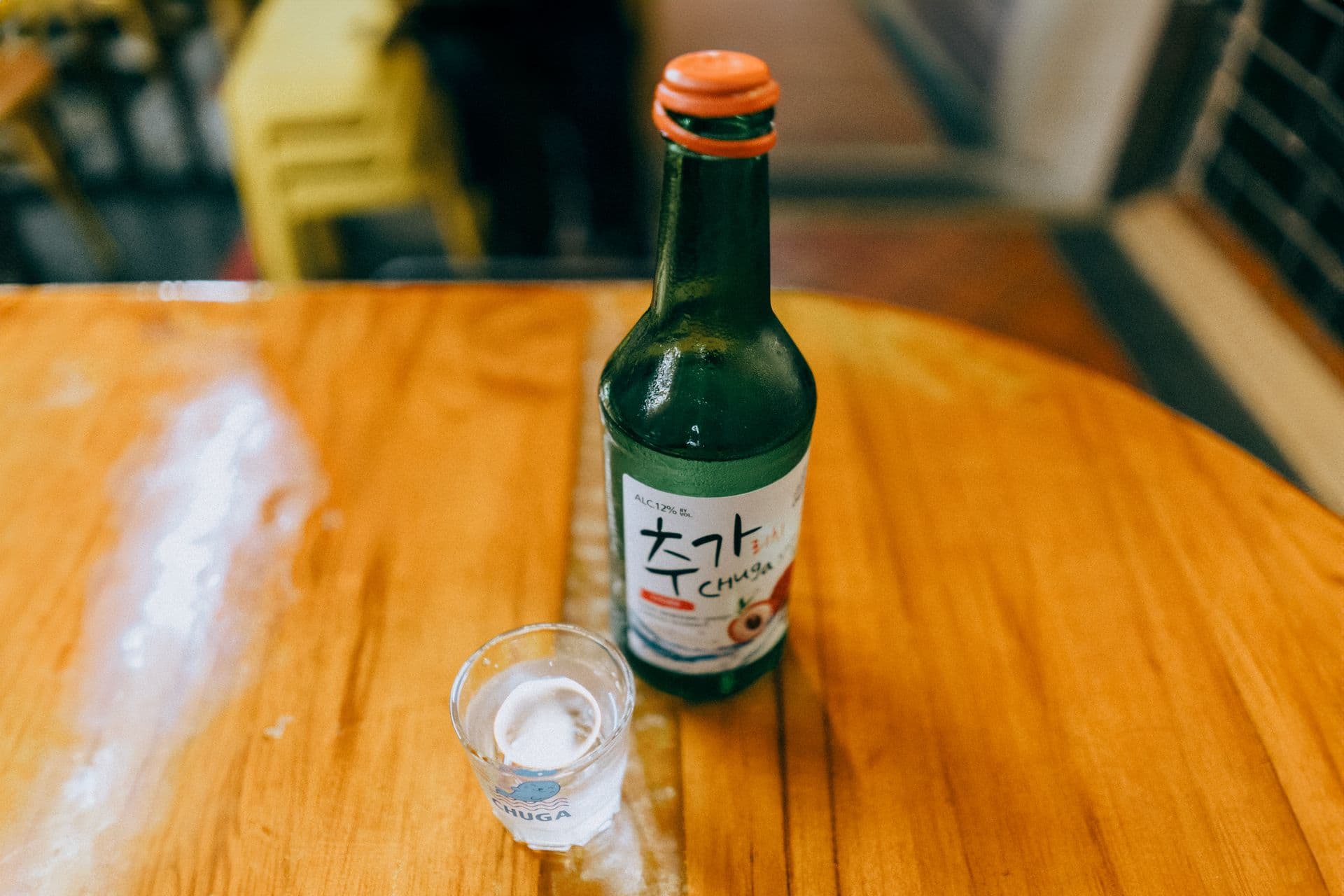
The green bottle arrives, and everything you do next is legible. Korean drinking culture is one of the most codified in the world — a table of colleagues in Seoul can read seniority, respect, and social fluency from nothing but how you handle a shot glass. The good news: the rules are few, learnable in one read, and Koreans are generous with foreigners who visibly try.
The first rule of korean drinking culture: never pour your own
Per the standard etiquette — documented everywhere from Wikipedia's entry on Korean drinking culture to Jinro's own drinking guide — the foundational rule is that you do not fill your own glass. You pour for others; someone pours for you. An empty glass in front of a companion is a small social failure, which is why Korean tables self-organize into constant mutual topping-up. Related mechanics: you do not refill a glass that is not empty, and when someone senior offers you a drink, declining the first one is harder than it sounds — the first round is traditionally drunk together, and finished. Then the cycle starts: you hand the empty glass back to whoever poured for you and pour one for them, and the cup-and-bottle passing works its way around the table.
Two hands, and the turn
Hierarchy is expressed through hands. Receiving a drink from someone older or senior, you hold the glass with both hands — or one hand with the other supporting your wrist or elbow. Pouring for a senior, same principle: both hands on the bottle, or the free hand at your pouring arm. And then the move that surprises visitors most: when drinking with elders, you turn your head away from them to sip, often shielding the glass. Facing a senior straight-on while drinking was traditionally read as disrespect.
These are not arbitrary quirks. Per the etiquette histories, the customs trace to Confucian ritual — the hyangeumjurye, ceremonial drinking gatherings of Confucian scholars and village elders where participants learned how to offer a drink and how to accept or decline one. The choreography is centuries older than the soju brands practicing it.
What soju actually is
The name means "burned liquor" — so for the heat of distillation, ju for alcohol. Distilling reached Korea in the 13th century with the Mongols, who had learned it from the Persians; Andong, where they kept a logistics base, gave rise to the home-brewed liquor that modern soju descends from. Traditional soju was distilled from rice at about 35% ABV — until 1965, when the government banned distilling it from rice to ease a rice shortage, and producers switched to diluted ethanol made from sweet potatoes and tapioca. That is the green-bottle soju you know. Strength now ranges from about 12.5% to 53%, but since 2007 low-alcohol soju, under 20%, has been the most common type.
Where the rules apply — and where they relax
Full formality peaks at work dinners (hoesik) and any table with meaningful age or rank gaps. Among close friends of the same age, most of it relaxes to a single principle: pour for each other, not yourself. The rules travel with the drink, too — the same etiquette governs beer and makgeolli, and it is the invisible operating system under every drinking scene in every K-drama you have watched. Soju itself is famously approachable: mild, neutral, sold everywhere, engineered for the communal shot format rather than solo sipping — which is why it lands most naturally across a grill.
Daniel's Bite
Foreign guides overweight the ritual and underweight the pace — the etiquette is easy; the refill velocity is what gets people. Because glasses are small and pouring is social, you lose count in a way you never do nursing your own drink, and hoesik culture historically leaned on that. Younger Koreans are visibly renegotiating it — per the same drinking-culture record, consumption has been declining since the mid-2020s, with health consciousness and post-pandemic office culture both cited. Companies ran their own campaigns years before that, like the "119" rule: one type of alcohol, one venue, done by 9pm. On the ground: low-alcohol soju variants keep multiplying and declining a round is more accepted in Seoul offices than it was even when I arrived in 2021. My advice as the foreigner at the table: master exactly two moves — receive with two hands, turn slightly away — and you will out-etiquette half the expats in Korea. My prediction: the two-hands rule outlives every other formality on this list; it is too elegant a respect signal to die.
What to try next
- Practice the pour-receive choreography once before a business trip to Korea — it is muscle memory, not knowledge.
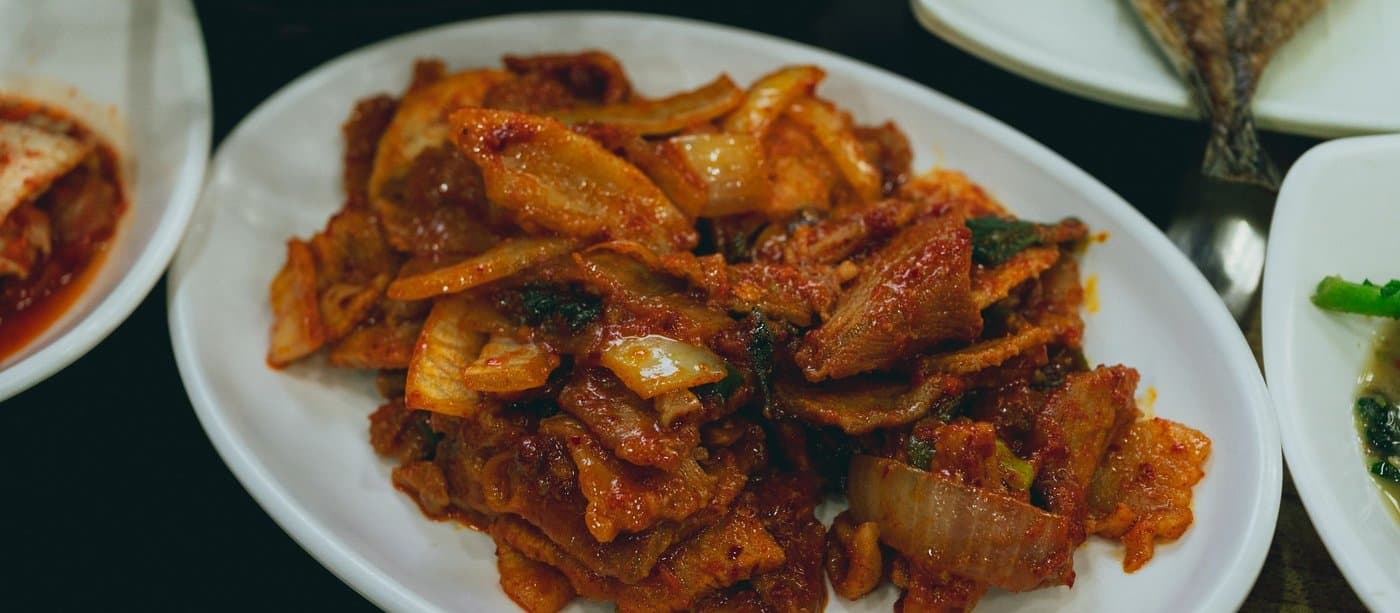
- Order soju alongside Korean fried chicken or KBBQ to meet it in its natural habitat.
- Watch for somaek — the beer-soju bomb — before attempting one; ratios are a personal religion in Korea.
- Want the whole rulebook illustrated? "Soju artist" Kim Wan-jun's How to Drink Soju came out in English in 2026, with a 10-step section on pouring and receiving — The Korea Times has the story.
Soju etiquette FAQ
Can you pour your own soju in Korea?
Traditionally no. You pour for others and someone pours for you; among close friends of the same age this relaxes, but pouring for each other remains the norm.
How do you receive a drink from an elder?
Hold the glass with both hands — left palm under it, right hand holding it — and bow your head slightly.
Why do Koreans turn away when drinking?
Turning away from an elder and covering your mouth and glass while you drink is a sign of respect.
Do you have to finish the first glass?
By tradition, yes — the first drink is finished in one shot.
How strong is soju?
Most bottles today are under 20% ABV; the category ranges from about 12.5% to 53%.
What is somaek?
A mixed drink of soju and beer (maekju), one of Korea's popular "bomb shots".
Sources
- Drinking culture of Korea — Wikipedia
- Illustrated guide to Korean drinking culture — The Korea Times
- Soju — production and varieties — Wikipedia