
The most common Korean BBQ mistake happens before anyone lights a burner: treating it as a cooking method. It is not — it is a table format. The grill sits in the middle, everyone cooks, the meal stretches for hours, and the meat is arguably not even the main event. Once you internalize that, running Korean BBQ at home stops being intimidating, because the bar is not restaurant equipment. The bar is a hot surface and the right supporting cast.
Korean BBQ at home gear — a burner, a pan, and scissors
Per the home-KBBQ guide at Arirang Bubu, a tabletop butane burner with a grill plate is the closest match to the restaurant experience, and typically runs about $30 to $50 at Korean groceries or online. No burner? A cast-iron pan on the stove works — get it properly hot and cook in batches, because a crowded pan steams the meat instead of searing it. The genuinely non-negotiable tool is kitchen scissors. Koreans cut cooked meat with scissors right on the grill: faster than a knife, keeps everything hot, and instantly makes the table feel correct.
Start with samgyeopsal — the three-layer meat
Samgyeopsal translates as "three-layer meat," describing the fat-lean strata of pork belly, and it is the most commonly eaten Korean BBQ cut in Korea. Crucially for home cooks, it goes on the grill unmarinated — thick slices, natural pork flavor, edges rendered crispy. That means zero prep beyond opening the package. Marinated cuts like bulgogi and galbi are worth adding later, but they burn easier and sauce up your grill; unseasoned pork belly is the beginner-proof entry point. If you see ogyeopsal — "five-layer" — at the butcher, that is the same cut with the skin left on.
It is also a surprisingly recent favourite. Until the 1980s Koreans preferred beef; pork and chicken were pushed at a national policy level because cattle were needed for farm work. The first known newspaper mention of the dish, in 1984, called it segyeopsal, and "samgyeopsal" only entered the standard Korean dictionary after 1994. The after-work dinner culture that followed the 1998 financial crisis made it office food, and Jeju black pork, sold by the 600-gram geun rather than per 100 grams, has shaped how it is served since the mid-2000s.
Veteran move: push kimchi and garlic cloves to the fat-runoff zone of the grill, where they fry in rendered pork fat into something better than either ingredient started as.
The ssam — and the one-bite rule
The wrap is the actual heart of the format. Take a lettuce or perilla leaf, add a piece of grilled meat, a dab of ssamjang (the thick fermented soybean-chile paste), maybe grilled garlic or a sliver of green chili — fold, and eat. The unwritten rule is strict: one bite. It is old, too — a Joseon-era etiquette book told readers to wrap a ssam small enough to bite, because puffing out your cheeks to eat one looked rude. Biting a ssam in half is the recognized rookie move; if it will not fit, you built it too big. Around the wraps orbit the banchan, a stew, and rice — which is why nobody leaves KBBQ having eaten only meat.
What comes after samgyeopsal
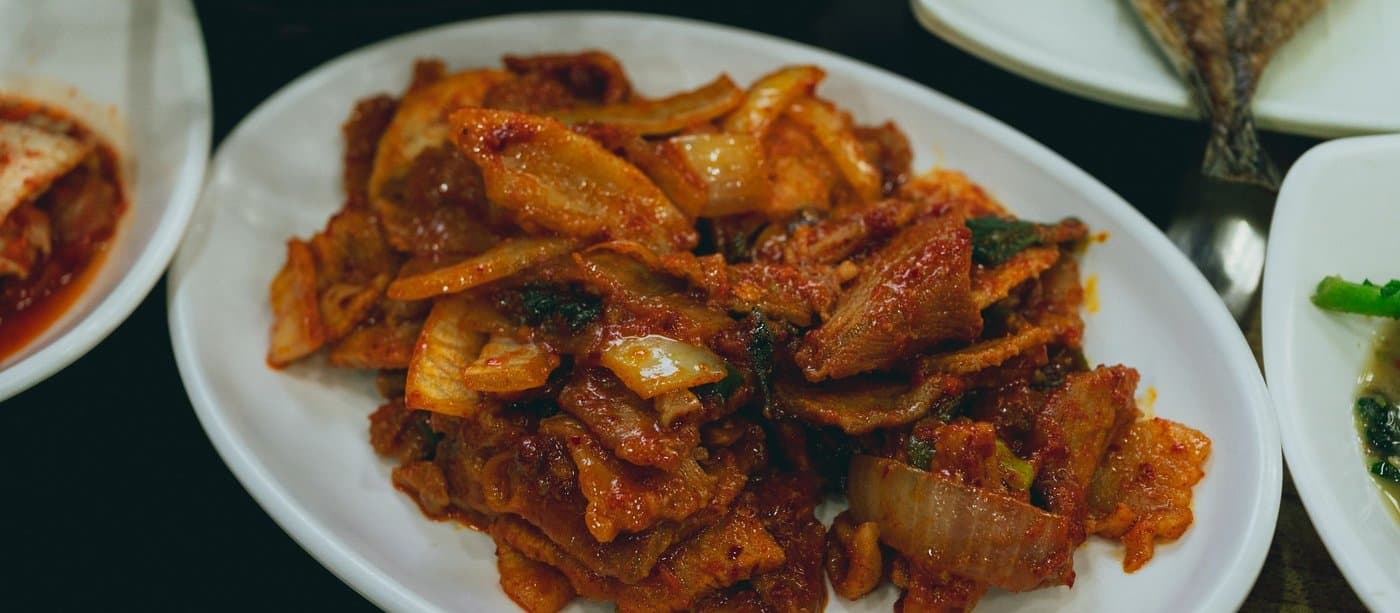
Once the pork belly routine is easy, three other cuts cover most of the restaurant menu. Chadolbaegi is brisket shaved so thin it cooks almost the moment it hits the pan — the fastest thing you will ever grill. Bulgogi, the most popular form of Korean barbecue, is thinly sliced beef marinated in soy sauce, sugar, ginger, scallions, sesame oil, garlic and pepper, traditionally with pear to tenderise it. Galbi is marinated beef short rib. For spicy pork, dwaeji bulgogi swaps the soy marinade for gochujang and gochugaru and works best with fatty cuts like shoulder or belly.
Round out the table the way restaurants do: rice and kimchi, pajeori (spicy green onion salad), lettuce, cucumber and peppers for wrapping, and — if you want to go further — gyeran-jjim, the steamed egg custard that is one of the most popular extra sides. To drink: beer, soju or makgeolli.
Daniel's Bite
KBBQ restaurants sell you two things: ventilation and pacing. You cannot replicate the first at home — open a window, accept smelling like pork belly, it washes out — but the second is free and people constantly get it wrong. Do not pre-cook anything, and do not rush; the guides say a proper KBBQ meal runs an hour minimum, ideally two, and the slow cook-a-little-eat-a-little rhythm is the entire social technology of the format. My firm opinion: perilla leaves over lettuce, every time — that herbal bitterness is what cuts the fat. My prediction: host KBBQ at home once and it will replace at least one restaurant visit a month in your rotation. The math is too lopsided — the burner pays for itself the first night.
What to try next
- Buy pork belly pre-sliced for samgyeopsal at a Korean market; ask for the thicker cut.
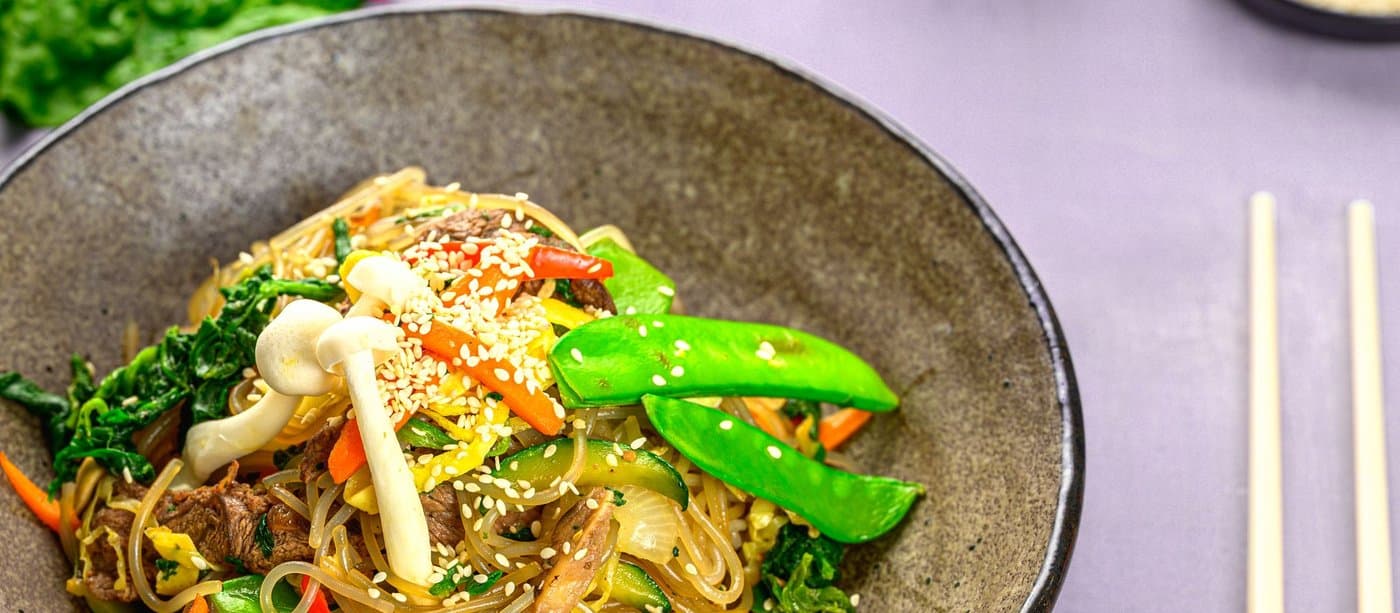
- Need a non-grilled dish for a crowd? Japchae scales up cleanly — double or triple the batch.
- Assemble the ssam station: red leaf lettuce, perilla, ssamjang, raw garlic, green chilies.
- End the meal Korean-style — fried rice scraped together on the residual grill fat, or a shot of soju with the last round, poured the proper way.
Korean BBQ at home FAQ
What is the best meat for Korean BBQ at home?
Samgyeopsal (pork belly). It needs no marinade and is the cut Koreans eat most often.
Should samgyeopsal be marinated?
Traditionally no — it is grilled plain. Marinated versions (ginseng, wine, doenjang, gochujang) have become popular since the late 2000s.
What is ssamjang?
A thick dipping paste of doenjang mixed with gochujang, used inside lettuce wraps.
What leaves are used for wraps?
Lettuce and perilla leaves are the standard pair.
What is the difference between bulgogi and galbi?
Both are marinated beef. Bulgogi is thin slices, usually sirloin or tenderloin; galbi is short ribs.
What do you drink with Korean BBQ?
Beer, soju and makgeolli are the usual choices.
Sources
- Korean barbecue — cuts, grills and table service — Wikipedia
- Samgyeopsal — pork belly grilling — Wikipedia
- Ssam — the wrap and its condiments — Wikipedia