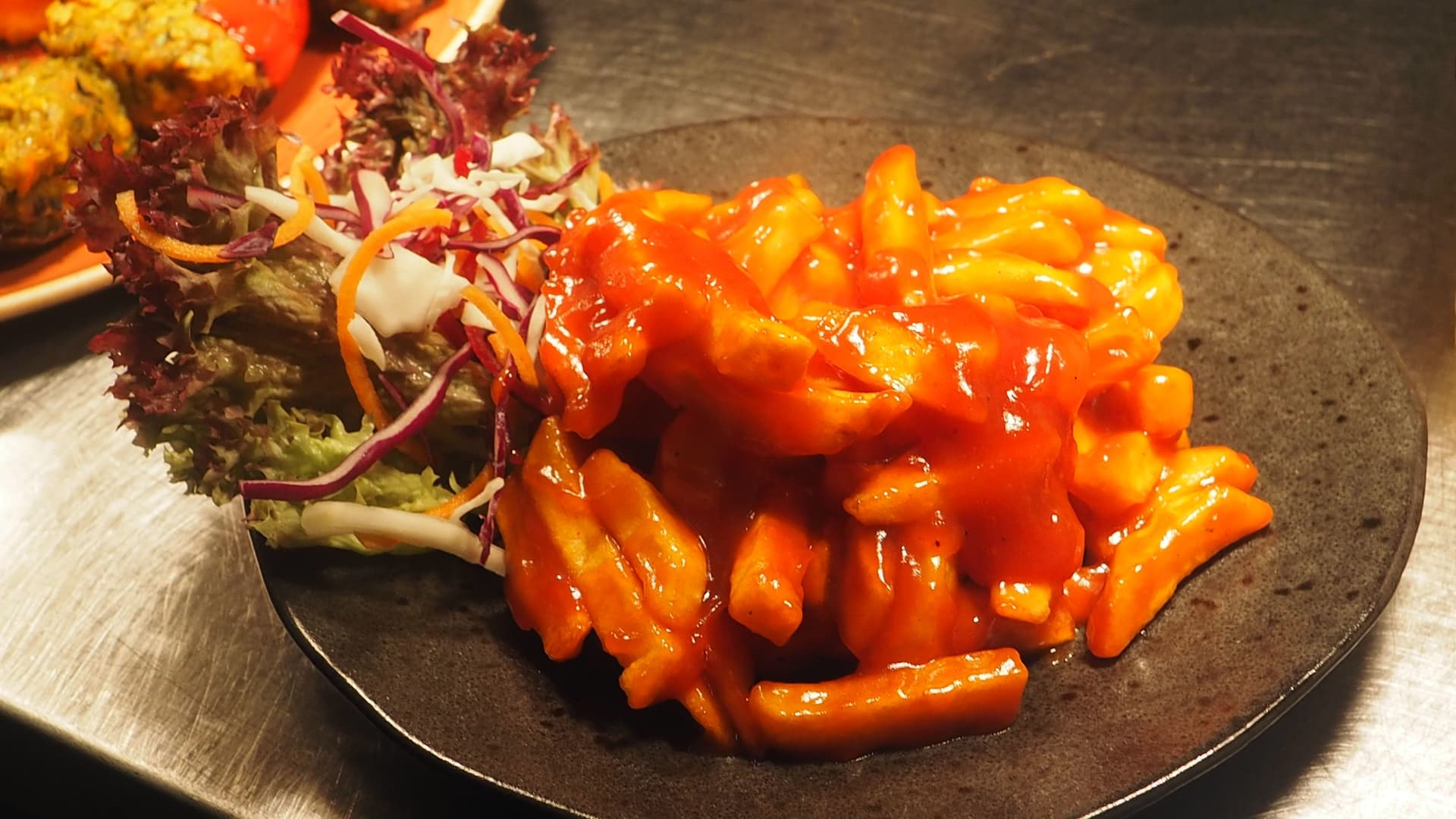
Every Korean who grew up near a school has a tteokbokki story. Maangchi's version — her recipe video has passed 15.9 million views on YouTube — starts with vendors outside her school stirring huge vats of it, selling paper cups of spicy rice cakes cheap enough for any student. The dish is deceptively simple: chewy cylinders of rice cake in a red sauce that is fiery, slightly sweet, and dangerously easy to keep eating.
The good news for anyone attempting a tteokbokki recipe at home: the authentic version needs about six ingredients and half an hour. The catch is the same one as with kimchi jjigae — the broth.
The anchovy stock secret behind this tteokbokki recipe
Maangchi learned her method from a market stall run by an old lady with a permanent line of customers, and the thing she noticed was the stock. Per her recipe, updated most recently in February 2025: boil 4 cups of water with 7 large dried anchovies and a sheet of dried kelp for 15 minutes, uncovered. She once ran out of anchovies and made it with plain water — her verdict was that it did not taste like tteokbokki at all. If you skip one shortcut, skip this one.
The sauce is a fixed ratio worth memorizing: one-third cup gochujang, 1 tablespoon gochugaru, 1 tablespoon sugar. Into the strained stock go 1 pound of cylinder rice cakes (garaetteok), the sauce, green onions, and — optionally but traditionally — fish cakes and hard-boiled eggs. Simmer and stir 10 to 15 minutes until the sauce thickens and turns glossy. Frozen rice cakes work fine; thaw and soak them in cold water first so they soften evenly.
Two details from the recipe that save a batch. The stock reduces to about 2½ cups once the anchovies and kelp come out — that is the liquid you are cooking in, not the 4 cups you started with. And if the rice cakes are still firm after 15 minutes, the fix is more water and more stirring: add a splash and keep the spoon moving until they give. Leftovers keep in the fridge for a few days and reheat fine, but Maangchi's own advice is to eat it all right after cooking.
Tteokbokki, topokki, ddukbokki — same dish, spelling chaos
You will see this dish romanized a dozen ways. A few years back the Korean government even tried to standardize the English name as "topokki" — and, per Maangchi, asked her to change it across her whole website. She refused because it sounded weird. The pronunciation, for the record: hard t sounds, and the "eo" lands closer to "u."
The dish also has a family tree worth knowing. Rosé tteokbokki — the creamy, gochujang-plus-cream version — had its viral moment a few years ago. And centuries before street carts, the Korean royal court ate gungjung tteokbokki, a non-spicy, soy sauce-based version that predates gochujang tteokbokki entirely.
From royal kitchen to Sindang: where tteokbokki came from
The first written record of tteokbokki is in Siuijeonseo, a 19th-century cookbook — and the dish it describes is nothing like the one you are making. The royal court version was white rice cakes with sirloin, sesame oil, soy sauce, scallions, pine nuts and ground sesame: savoury, brown, not spicy at all. That is the gungjung tteokbokki mentioned above.
The red version is a post-war invention. The commonly told origin story puts it in 1953, when Ma Bok-rim dropped a rice cake into jajangmyeon at a restaurant opening, liked the result, and started seasoning rice cakes with gochujang instead. She sold them in Sindang, in Seoul, and the neighbourhood is still known for tteokbokki today. Cheap imported wheat flour from the 1950s onwards meant wheat-flour rice cakes became a common stand-in for rice ones, and by the 1970s the spicy version had become a popular, inexpensive snack.
Soupy, dry, and everything in between
What you are cooking here is gungmul tteokbokki — the soupy style, built on anchovy-kelp stock, and the de facto standard. Its opposite is gireum tteokbokki, "oil tteokbokki": no gochujang, just gochugaru, soy sauce, sugar and sesame oil tossed through soft rice cakes and stir-fried dry. Tongin Market in Seoul's Jongno district is famous for it. Add ramyeon noodles and you have rabokki; add chewy jjolmyeon wheat noodles and it becomes jjolbokki. And jeukseok tteokbokki is the hot-pot version cooked on a burner at your table — a meal rather than a snack, which is why it usually ends with fried rice made in the same pan.
What to serve with it — and what it costs you
Tteokbokki is a snack in Korea, not a main. The classic pairing is odeng (fish cake skewers in broth) and something fried from the same street food cart. Add-ins are a personality test: dumplings, cabbage, ramen noodles, or the maximalist move — a blanket of mozzarella. A batch from scratch costs a fraction of the instant cups, and unlike the cups you control the heat: dial the gochugaru down to 1 teaspoon and it becomes family-friendly without losing the flavor.
Daniel's Bite
Tteokbokki is the dish I test Korean restaurants abroad with, because it is nearly impossible to fake — if the kitchen microwaves pre-made sauce onto pre-boiled rice cakes, the texture betrays them in one bite. The rice cake should resist your teeth slightly, then give. My honest advice runs against the fusion tide: learn the classic before you touch rosé or cheese versions, because they are built on top of this flavor base, and if you cannot taste what the anchovy stock adds, the upgrades are just noise. My prediction: make this twice and the instant tteokbokki cups in your pantry will expire untouched.
What to try next
- Same stock, different dish — the anchovy-kelp base carries straight into kimchi jjigae.
- Find garaetteok in the refrigerated or frozen section of any Korean grocery; fresh softens fastest.
- Try the cup version at a Korean convenience store once, then taste the gap against this batch.
- Try gungjung tteokbokki when you want the royal-court, non-spicy angle on the same rice cakes.
Tteokbokki FAQ
Is tteokbokki very spicy?
The classic gochujang version is fiery and a little sweet. For less heat, cut the gochugaru — or make gungjung tteokbokki, the soy-sauce version, which is not spicy at all.
Can I use frozen rice cakes?
Yes. Thaw them and soak them in cold water first so they soften before they go into the sauce; fresh rice cakes soften faster.
Why are my rice cakes still hard?
They have not had enough liquid or time. Add a little water and keep stirring over the heat until they turn soft and the sauce goes glossy.
Do I need anchovy stock?
It is the difference between tteokbokki and rice cakes in chilli sauce. Maangchi made it once with plain water and said it did not taste like tteokbokki at all.
What is the difference between tteokbokki and rabokki?
Rabokki is tteokbokki with ramyeon noodles added to the same sauce.
How long does tteokbokki keep?
A few days in the fridge. It reheats, but the rice cakes are never as good as on the first day.
Sources
- Tteokbokki (Spicy rice cakes) — Maangchi
- Tteok-bokki — history and street-food forms — Wikipedia