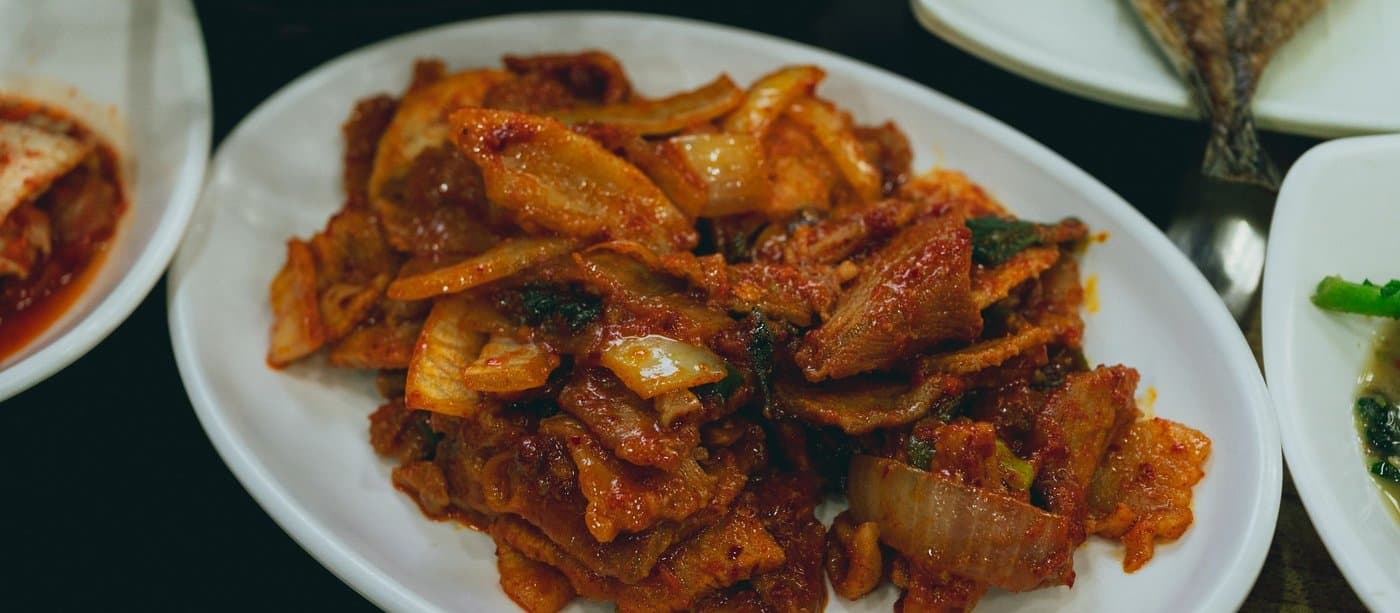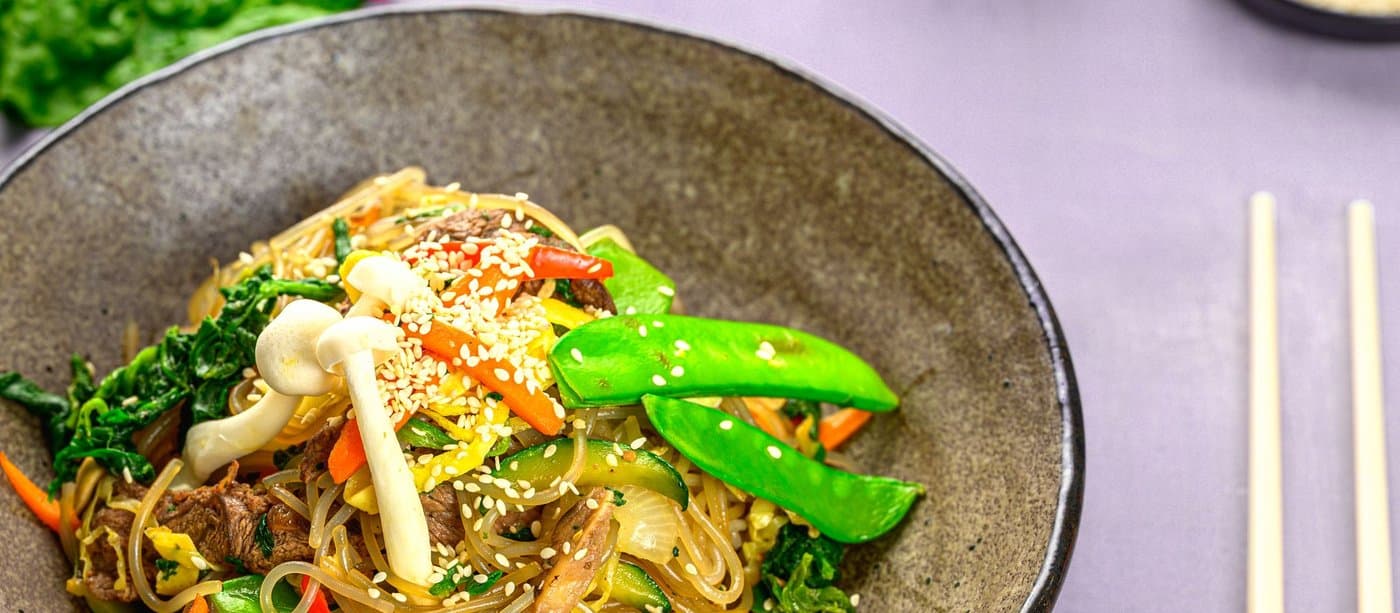
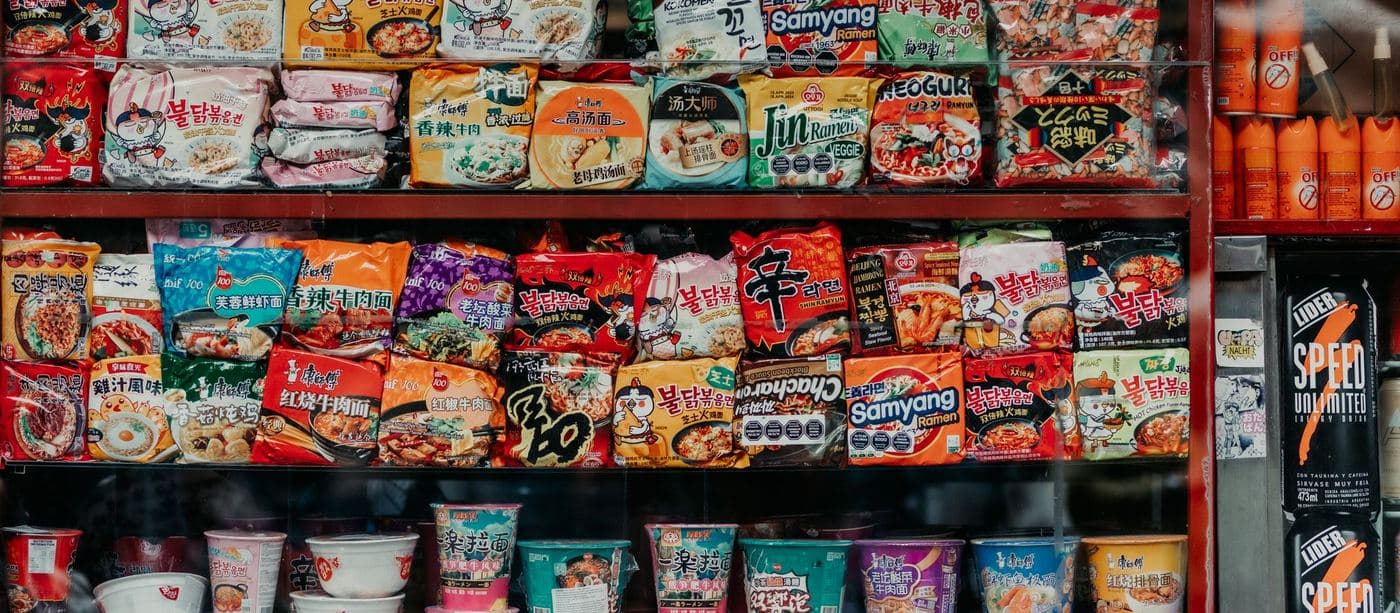
Stand on almost any Seoul street corner and you can see all three at once: a GS25, a CU and a 7-Eleven, sometimes within a hundred meters of each other. Korean convenience store food is not backup food — it is a legitimate meal category locals eat constantly, and the three chains are far less interchangeable than they look. The division of labour, after enough late-night field research: GS25 wins prepared food, CU wins snacks and ramen, 7-Eleven wins late-night hot food. Prices barely differ — a triangle kimbap runs 1,200 to 1,500 won at any of them — so you are not choosing on cost. You are choosing on what each chain is actually good at.
GS25: the dosirak benchmark
If you make one stop, make it GS25 for the prepared food shelf. The flagship is the Kim Hye-ja dosirak — lunch boxes named after the veteran Korean actress — at 4,500 to 5,500 won, and they deliver roughly what a 12,000-won restaurant meal would: big portions, rotating banchan, a rice-to-protein ratio somebody actually thought about. GS25 rebuilt the entire line in September 2026 — toppings over the rice, a dedicated seaweed pack — so the boxes on the shelf now are not the ones your 2025 guidebook reviewed. The rebuild was driven by purchase data: mains now centre on the best sellers (stir-fried pork, chicken, bulgogi, hamburg steak), side dishes on everyday home cooking, toppings such as grilled pork neck and a mini soft-boiled fried egg sit on the rice, and the boxes come with their own seaweed, "Hyeja Gim". The renewal was due to reach the whole lunch box range by October. The operational detail that matters: stores restock around 11am and 5pm, and the good boxes go fast. Back it up with the 1,500-won tuna mayo samgak-kimbap — the most popular triangle kimbap in the country, with the pull-tab 1-2-3 opening system that keeps the seaweed crisp — and the strange-good egg salad sandwich at 2,500 to 3,500 won.
CU: snacks, collabs and the cream bread
CU's lunch boxes are fine. What CU has that nobody else does is the Yonsei Milk Cream Bread, 3,500 won, a CU exclusive and the fastest-selling convenience store product the country has had — 100 million units in four years and three months, a category record — soft milk bread that is mostly a delivery vehicle for the cream inside — literally: cream makes up about 80% of its weight. The run is remarkable on paper: 500,000 sold in its launch month in January 2022, 19 million in the first year, 50 million by January 2024, and more than 20 million a year since. CU keeps it fresh by rotating flavours — 39 versions so far, a new one roughly every two months — and it has carried the chain's dessert sales with it, up 62.3% in 2025. CU also stocks the widest Buldak instant-ramen lineup in the country, 1,500 to 2,000 won a cup — carbonara, mala, jjajang and whatever limited edition is rotating — with hot-water stations to cook it on the spot. If your itinerary includes eating a spicy ramen at a plastic counter at midnight, and it should, CU is the venue.
7-Eleven: the 2am specialist
Korean 7-Eleven — which, like GS25 and CU, operates independently of the global chains you know, with a fully Korea-specific lineup — is the weakest of the three for cold prepared food and the strongest for hot. The rotating hot-bar display of fish cake skewers (1,500–2,000 won, cheese flavor is the reliable pick), fried chicken pieces at 2,000–3,000 won, and the best selection of self-heating dosirak — pull a string and the box cooks itself, 5,000 to 6,000 won, built for late trains. After 1am, when GS25's shelves are picked over, this is where the warm food is.
How to run the full tour
The math is friendly: onigiri plus the iconic pot-shaped banana milk (1,400 won) lands under 3,000 won; a dosirak with a drink is 5,500 to 7,000; a full late-night spread — hot box, drink, snack — tops out around 8,000 to 10,000 won. Microwaving is free (hand the cashier your tteokbokki, or use the self-serve microwave), eat-in counters are normal, and a cold bottle of makgeolli is 2,000 to 3,000 won — shake it first, the sediment settles. Two tools make the trip smoother: Papago's camera translation for the Korean-only labels, and our won-to-USD converter for the moment you realize you have eaten four times today and want to know the damage.
Daniel's Bite
Tourists queue for the cream bread; the actual best purchase in the building is the 5,000-won dosirak, and it is not close — that is a composed meal with rotating banchan for the price of a New York coffee. Nothing like this exists in American convenience stores, and it can't, because the Korean chains are independent operations that treat food as the main event rather than a gas-station afterthought — the LA 7-Elevens of my childhood would not recognize their Seoul namesakes. The detail most guides miss is the restock rhythm: 11am and 5pm at GS25 is when the shelf is honest. My prediction: the Yonsei cream bread era ends the way all viral eras end — watch whether GS25 ships its own exclusive dessert answer by winter. If it does not, CU keeps the tourist line for another year.
What to try next
- Compare the convenience store version of tteokbokki to the street stall original in our Korean street food guide — the gap says a lot about both.
- Turn a self-heating dosirak into drama-night fuel: our K-drama food guide covers what everyone on screen is actually eating.
- Run your convenience store haul through the currency converter before you tell yourself it "barely cost anything."
- Learn what separates the triangle from a proper roll in our kimbap guide.
Korean convenience store FAQ
Which Korean convenience store has the best food?
For prepared lunch boxes, GS25; for snacks, ramen and the cream bread, CU; for hot food late at night, 7-Eleven.
What is Yonsei Milk Cream Bread?
A CU-exclusive milk bread filled with cream — about 80% of its weight — that passed 100 million units sold about four years and three months after launch.
What is samgak kimbap?
Triangle kimbap: rice with a filling, wrapped in seaweed and sold in convenience stores. Its shelf life is one day.
Can you eat inside a Korean convenience store?
Yes. Eat-in counters, hot water for ramen and a microwave are standard.
Are Korean convenience store lunch boxes a real meal?
That is the point of them — GS25's 2026 renewal was pitched at making the dosirak a complete meal rather than a stopgap.
Sources
- GS25 overhauls lunch box lineup with new home-style meals — Seoul Economic Daily
- CU's Yonsei Milk Cream Bread tops 100 million units sold — Seoul Economic Daily
- Why CU's Yonsei Milk Cream Bread became one of Korea's biggest convenience store hits — Stripes Korea